Dull on Purpose: How Stripping the Shine Off Your Content Is Building the Realest Audiences Online
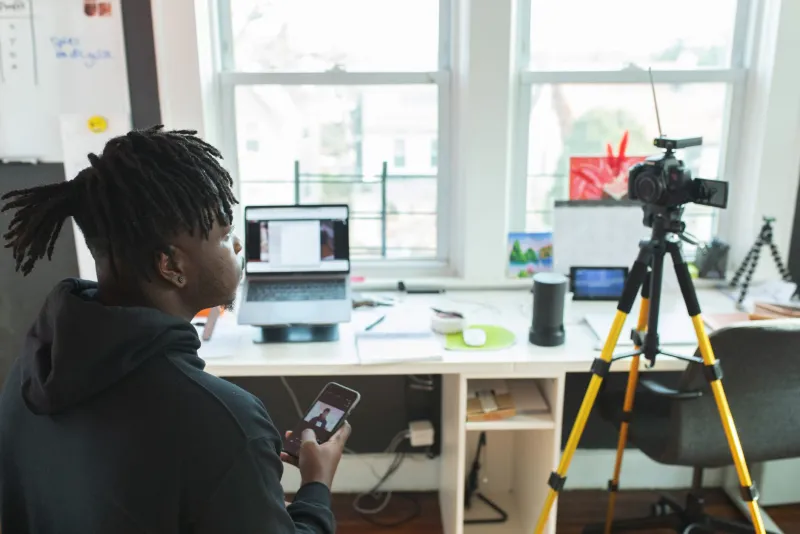
There's a guy on YouTube who films himself repotting plants. No music. No jump cuts. No "smash that like button" energy. He just... repots plants. Talks a little. Sometimes trails off mid-sentence. His subscriber count isn't in the millions, but his comment section reads like a neighborhood barbecue — people actually know each other, reference old videos, ask follow-up questions from three months ago. It's a tight room. And that tight room, increasingly, is what a lot of creators are chasing.
This isn't a fringe thing anymore. Across YouTube, Substack, TikTok, and whatever corners of the internet you frequent, there's a quiet but deliberate movement happening. Creators are pulling back the optimization layer — the punchy intros, the strategic b-roll, the lighting that makes everyone look like they're selling something — and replacing it with something that used to be considered a liability: ordinariness.
And it's working. Not in a viral, numbers-spiking kind of way. In a different, slower, arguably more valuable kind of way.
The Problem With Perfect
Spend enough time consuming content and you start to feel the machinery underneath it. The three-second hook. The emotional beat at the two-minute mark. The call-to-action tucked right before the outro music kicks in. You don't consciously register it, but your brain does — and over time, it starts reading everything like a sales pitch.
That's the trap high-production content fell into. The same techniques that once felt fresh and engaging have become so ubiquitous that they've started triggering skepticism instead of connection. When everything is optimized, nothing feels honest.
The creators who figured this out first didn't necessarily do it on purpose. Some of them just couldn't afford the gear, or didn't have time to edit, or simply didn't care enough to perform. And then something weird happened: people showed up. Not just clicked — showed up. Returned. Talked back.
Awkward Is the New Authentic
There's a Substack writer based out of somewhere in the Midwest who publishes essays about her experience working in a hospital billing department. She doesn't have a brand. Her header image looks like it was made in Microsoft Paint circa 2004. Her writing meanders. She goes on tangents. Sometimes she ends a piece without a real conclusion.
She has a paid subscriber list that her more polished peers would envy.
What she has — and what the plant repotting guy has, and what a growing number of creators are learning to cultivate — is the absence of performance anxiety. When you're not trying to optimize, you're not broadcasting the effort of trying to optimize. Readers and viewers pick up on that in ways they can't always articulate. It feels like talking to someone versus watching someone talk at you.
The awkward pause, the unflattering angle, the video that's two minutes too long because the creator forgot to cut something — these are signals. They're saying: this person is not running a play on you. And in 2024, that signal is rarer and more valuable than ever.
What Gets Lost When You Polish Everything
Here's the thing about optimization: it's a process of subtraction. You cut what doesn't work. You trim the fat, tighten the pacing, punch up the hooks. All of that is sensible. But somewhere in that process, a lot of creators are cutting the thing that made them worth watching in the first place.
Personality doesn't live in the highlight reel. It lives in the in-between stuff — the weird tangent, the opinion that doesn't quite land, the moment where someone's just visibly thinking out loud. When you edit all of that out, you end up with something technically competent and emotionally hollow. You end up with content that performs well on the dashboard and barely registers in someone's memory.
There's a reason people quote their weird uncle at Thanksgiving more than they quote a Forbes contributor. Texture matters. Imperfection is information.
The Audience You Actually Want
Here's where it gets interesting from a purely strategic angle, even if strategy isn't really the point.
The audiences built on unoptimized content tend to be stickier. They convert better, if that's your thing. They're more likely to buy something, support a Patreon, or show up when you do something new. The theory isn't complicated: if someone found you despite your rough edges — or because of them — they're not going anywhere the moment a slicker competitor shows up. They're not there for the production value. They're there for you.
Compare that to the audience built on highly engineered content. That audience is real, but it's also fragile. It was attracted to a version of you that's exhausting to maintain. One off season, one creative pivot, one video that doesn't hit the same marks — and the metrics crater. Because the relationship was always with the performance, not the performer.
Static as a Signal
There's something fitting about the fact that this trend is most visible in the quieter corners of the internet — not on the main stage, not in the trending tab. It lives in the comment sections of mid-size YouTube channels, in the reply threads of newsletters that don't have brand deals, in Discord servers where people are genuinely just talking about a thing they like.
That's where the signal lives. Not in the polished feed. In the static.
The creators leaning into this aren't making a sacrifice. They're making a bet — that the people who find them in the noise are worth more than the masses who scroll past the perfectly crafted thumbnail. And increasingly, that bet is paying out.
How to Be Boring (Well)
None of this means you should start producing garbage on purpose. Deliberate sloppiness is its own kind of performance, and people clock it just as fast. The move isn't to manufacture imperfection — it's to stop manufacturing perfection.
That looks different for everyone. Maybe it's publishing the essay that doesn't have a clean ending. Maybe it's leaving in the part of the video where you lose your train of thought. Maybe it's writing about the thing you actually care about instead of the thing that has search volume.
The bar isn't bad. The bar is real. And right now, real is in short supply.
The most interesting stuff online isn't optimized for the algorithm. It's optimized for the person who's going to read it at 11pm on a Tuesday because they couldn't sleep and they needed to feel like someone else out there was also just... figuring it out.
That's the audience worth building. And boring, it turns out, is the fastest way to find them.