Born in the Static: How Forgotten Internet Corners Keep Making Real Art
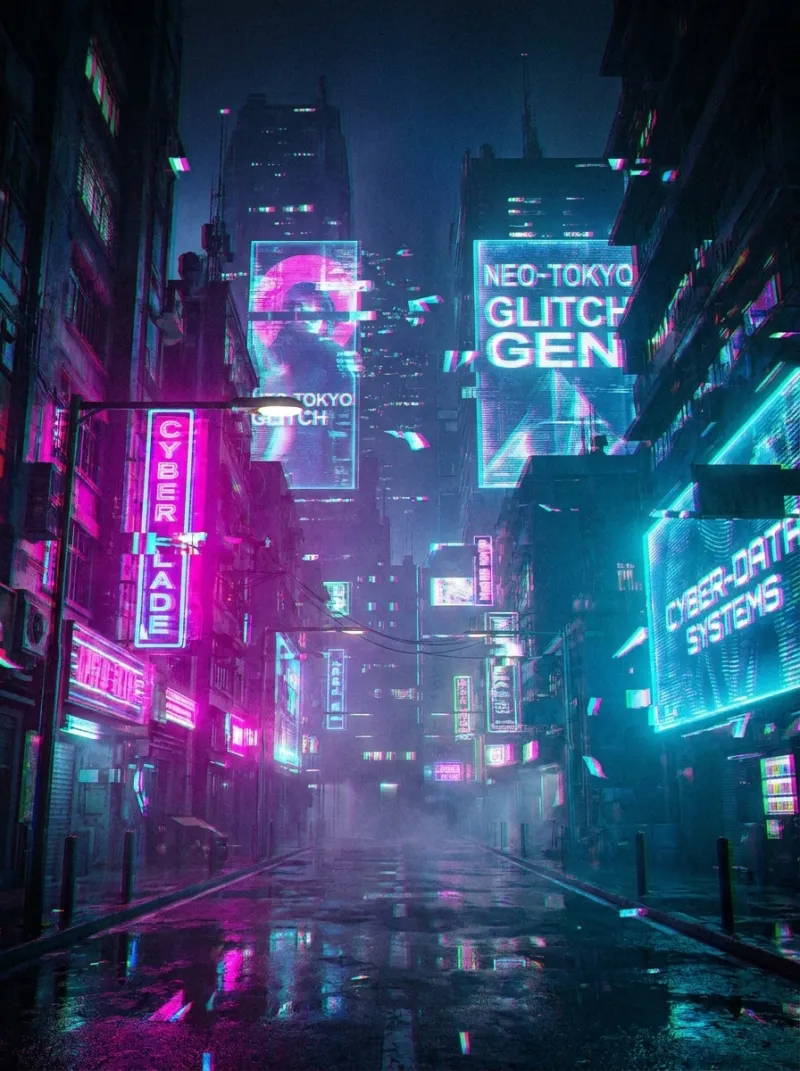
Photo: neon glitch art underground digital community aesthetic, via images.media.io
Forget the algorithm for a second. Forget follower counts, engagement rates, and whatever the trending audio is this week on Reels. The most genuinely alive creative work on the internet right now is happening in places with no audience, no monetization strategy, and often no real name.
It's happening in Discord servers with 200 members and inside jokes that don't translate outside the channel. It's happening in subreddits that peaked in 2019 and never really recovered. It's happening in comment threads on videos with 340 views.
And somehow — maybe because of all that — it's producing something real.
Why Obscurity Is Actually an Advantage
Mainstream platforms are optimization machines. Everything about their design pushes creators toward content that performs, and performance is measured by metrics that favor the broad, the immediate, and the emotionally simple. Nuance doesn't scale. Weirdness is risky. Experimentation is inefficient.
So the stuff that's genuinely strange, genuinely specific, or genuinely unpolished gets filtered out before it reaches most people. Which means it accumulates elsewhere — in low-traffic corners where nobody's optimizing for anything, where the only reason to make something is because you wanted to make it.
That's not a consolation prize. That's actually a creative environment that's almost impossible to manufacture artificially. Authenticity as a byproduct of irrelevance.
Here are some of the pockets where this is actually happening.
The Vaporwave Archaeology Discord Servers
Vaporwave as a genre has been declared dead so many times it's practically a meme at this point. But the communities built around it never fully dissolved — they just went deeper underground.
There are Discord servers dedicated to what members call "vaporwave archaeology": tracking down obscure releases, lost Bandcamp pages, and defunct SoundCloud accounts from the genre's early days. What started as archival work has turned into something weirder. Members have started composing new music in the styles of artists who no longer exist, essentially creating fan fiction for sounds.
The results are uncanny in the best way — music that sounds like it's from a timeline that branched off from ours around 2013 and went somewhere else entirely. None of it charts. Most of it has fewer than a thousand plays. All of it sounds like nothing else being made right now.
The Liminal Space Photography Communities
If you've spent time in certain Reddit corners or Tumblr archives, you've encountered liminal space photography — images of empty shopping malls, hotel corridors, school hallways at 3 a.m., swimming pools with the lights off. Spaces that feel simultaneously familiar and wrong.
What began as a niche aesthetic interest has evolved into a surprisingly coherent artistic movement with its own vocabulary, ethics, and ongoing debates about what qualifies as genuinely liminal versus what's just a moody photo of a parking garage.
Communities in spaces like r/LiminalSpace and its various offshoots have developed a collective visual language that academic photographers are now starting to take seriously. The work coming out of these communities has influenced horror game design, music video aesthetics, and architectural criticism — not because anyone was trying to influence those fields, but because the ideas were good enough to escape their original context.
Weird Fiction Comment Threads
The NoSleep subreddit is well-known enough at this point that it barely counts as obscure. But the communities that splintered off from it into stranger territory are a different story.
Smaller horror writing communities — some on Reddit, some on private forums that have been running since the early 2010s — have developed their own distinct narrative traditions that don't map onto conventional horror at all. There are communities dedicated to what members call "ergodic horror": stories that can only be experienced correctly if you read them in a specific non-linear order, or stories that require the reader to perform an action (look something up, navigate to a specific URL) to unlock a layer of meaning.
This is genuinely experimental literary form happening in comment sections. Some of it is rough. Some of it is extraordinary. Almost none of it has been published anywhere that would give it mainstream visibility, which is part of why it remains so strange.
Hyperpop's Forgotten Footnotes
Hyperpop went mainstream enough that major labels got involved, which did what major label involvement usually does. But before that happened, there was a period of absolute chaos on SoundCloud and Bandcamp where producers were making music that sounded like a computer having a breakdown in the best possible way.
Some of those producers are still working in the same vein, largely ignored by the version of hyperpop that got absorbed into the mainstream. Their work has gotten weirder, more maximal, more deliberately difficult. There are small communities on Discord and dedicated Bandcamp pages that track this output with the same energy that jazz enthusiasts bring to obscure '60s recordings.
The music is genuinely hard to listen to. It's also genuinely interesting in a way that the polished, label-backed version of the genre stopped being almost immediately.
What This Actually Tells Us
There's a pattern across all of these communities: they produce interesting work precisely because they've given up on being seen. Not out of despair, but out of freedom. When there's no audience to perform for, when there's no algorithm to satisfy, when there's no monetization path to protect, the only thing left is the thing itself.
That's the static this site runs on. Not the noise of content optimized for engagement, but the actual signal underneath — the stuff that exists because someone had to make it, not because a platform rewarded them for making it.
The internet keeps building these little pockets of genuine creativity and then forgetting about them. Which is fine. They work better when nobody's paying attention.
Go find one.