Buffer Intentional: The Creators Making You Wait — And Why That's the Point
There's a specific kind of discomfort that comes with watching a progress bar that refuses to move. Your thumb hovers. Your jaw tightens. You refresh, even though you know refreshing won't help. That friction — that low-grade digital frustration — is exactly what a small but growing group of creators is engineering into their work on purpose.
This isn't about bad infrastructure. It's about control. And it might be the most interesting thing happening in online content right now.
The Setup: Speed as a Default We Never Questioned
For the better part of a decade, the entire tech industry optimized relentlessly for one thing: faster delivery. CDNs, edge computing, pre-loading algorithms — all of it pointed in the same direction. Get the content in front of the eyeballs with zero resistance. The assumption baked into every platform was that friction equals failure.
But here's the thing about assumptions: someone always starts questioning them.
A loose network of experimental creators — video essayists, musicians, newsletter writers, podcast producers — has started deliberately introducing latency into their release structures. Not buffering in the technical sense, necessarily, but manufactured delay as a design choice. Staggered drops. Intentionally throttled early access. Content that only fully resolves after a waiting period. One video essayist based out of Portland releases new work exclusively through an RSS feed that delivers episodes 72 hours after they're technically ready. Another musician distributes new tracks in sequential fragments, one per week, with each piece only making sense once the final one arrives.
The aesthetics of waiting, it turns out, can be engineered.
Why Delay Filters the Room
Ask anyone running one of these experiments and they'll tell you the same thing pretty fast: the wait isn't just a gimmick. It's a sorting mechanism.
When content is instantly available, the audience that shows up is everyone — including people who will bounce in eleven seconds, skim without listening, screenshot without context. Instant gratification attracts impulse. Delay attracts investment.
One podcast producer who runs a serialized audio drama described it this way: when she switched from weekly drops to a model where listeners had to opt into a slow-release email chain to get each act, her listener numbers dropped by roughly 40 percent. Her engagement metrics — episode completion, community replies, direct messages — went up by something closer to 300 percent. She lost the casual audience and kept the obsessives. For her purposes, that was a straight upgrade.
This is audience curation through inconvenience, and it's more intentional than it sounds. The people willing to tolerate a wait are, almost by definition, the people who actually care. Everyone else self-selects out. No algorithm needed. No paywall. Just patience as a barrier to entry.
The Narrative Argument: Tension Isn't a Bug
Beyond audience filtering, there's a creative case for deliberate lag that goes deeper than strategy.
Tension is a storytelling tool as old as storytelling itself. The pause before the reveal. The chapter break at the worst possible moment. The cliffhanger that sends you to sleep thinking about a fictional problem. These aren't accidents — they're techniques that exploit the human brain's discomfort with unresolved loops. We are neurologically wired to pursue closure, and skilled storytellers have always used that against us in the best possible way.
Digital media, in its rush to eliminate friction, largely abandoned that tool. When everything is available at once, binge-watching becomes the norm, and binge-watching compresses the emotional arc of a story into something closer to consumption than experience. You finish a six-episode series in a single Saturday and feel vaguely empty by Sunday.
Introducing delay reintroduces time as a narrative dimension. When you have to wait a week between installments, the story lives in your head during that gap. You think about it. You speculate. You build a relationship with the work that goes beyond passive reception. Some creators are now explicitly designing for that gap — seeding ambiguities and open questions that are meant to ferment during the waiting period, not resolve immediately.
The Counterintuitive Platform Play
What makes this trend especially interesting is that it runs directly against the incentive structure of every major platform. YouTube rewards upload frequency. Spotify rewards catalog depth and constant new releases. TikTok's entire architecture is built around the next thing appearing before you've finished processing the current thing.
Creators who deliberately slow down are, in platform terms, leaving engagement on the table. They're choosing a smaller, slower signal over a louder, faster one.
That's not a mistake. For some, it's the whole point.
There's a growing sentiment — particularly among creators who've spent years chasing algorithmic favor — that optimizing for platforms is a form of creative capture. You end up making content for the algorithm's preferences, not your own. Deliberate lag is, among other things, a way of opting out of that feedback loop. You can't really game a release structure that runs on its own internal logic. The platform can't recommend what hasn't fully arrived yet.
Some of these creators have explicitly said they're not trying to grow. They're trying to deepen. The distinction matters more than it might seem.
Static as Signal
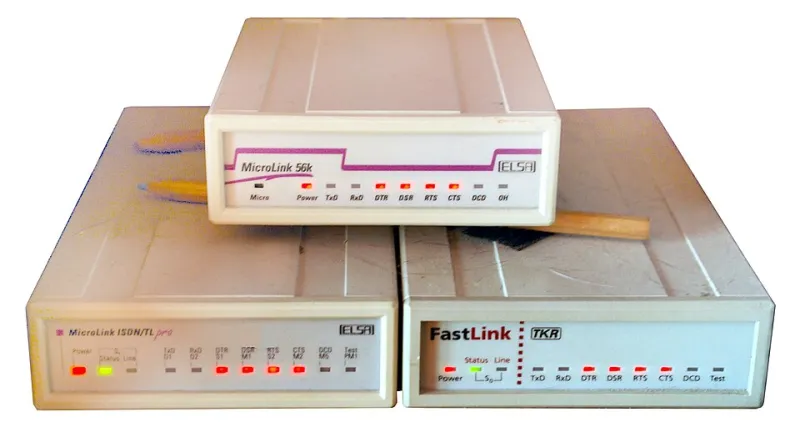
There's something almost nostalgic about all of this, but not in a regressive way. Early internet culture had a different relationship with waiting — dial-up loading screens, forum threads that updated once a day, zines that arrived by mail. There was an inherent gap between creation and reception, and that gap had texture. It meant something to finally get access to the thing you'd been anticipating.
The creators experimenting with deliberate lag aren't trying to recreate 1998. They're trying to recover something that got optimized away: the emotional weight of anticipation. The sense that what you're about to receive is worth the wait because the wait itself has been part of the experience.
In a media landscape where everything is instant and therefore slightly disposable, making someone wait is almost a radical act. It implies that what you're delivering has enough value to justify the friction. That's a claim most platforms won't let you make. But the ones making it anyway — slowly, deliberately, on their own terms — are finding audiences that believe them.
The buffer is still spinning. Sit with it for a second.