Dead Apps Don't Lie: The Strange Peace of Living With Software Nobody Updates Anymore
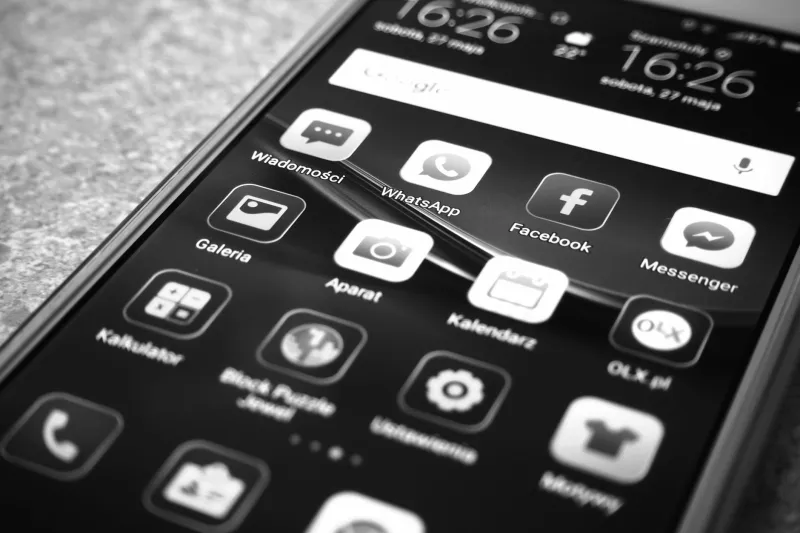
There's a flashlight app on Marcus Webb's phone that hasn't been touched by its developer since 2016. No patch notes. No privacy policy refresh. No desperate push notification begging him to rate it five stars. It just... works. Silently. The way things used to.
Marcus — a graphic designer based in Portland — isn't some tech refusenik. He's got the usual suspects on his home screen. But tucked three folders deep, there's a small graveyard of apps he refuses to delete. A weather app with a UI that looks like it was designed during the flat-design gold rush. A note-taking tool whose company quietly folded sometime around 2019. A music visualizer that crashes on anything above iOS 14 but, when it does run, produces something genuinely beautiful.
"I keep them because they remind me the internet used to make weird little things just to make them," he says. "Nobody was optimizing for retention. They just built something and put it out there."
That feeling — the signal buried under years of digital sediment — is exactly what ROUPNKW is built to chase.
The Update Treadmill Nobody Asked For
Here's the thing about modern apps: they never stop talking. Version 14.2.1. Critical security update. We've made some improvements to your experience. Behind every changelog is a product team justifying their existence, an algorithm that needs feeding, a VC somewhere expecting growth.
Abandoned apps opt out of all of that involuntarily — and in doing so, they accidentally become something rare. Static. Finished. Done.
There's a philosophical weight to software that has stopped trying to improve itself. In a digital culture that treats stasis as failure, an app frozen in 2017 is basically a provocation. It's saying: this is what we were. We're not becoming anything else.
For a growing number of users — mostly creatives, but also just regular people exhausted by the churn — that provocation feels like relief.
Digital Archaeology as Daily Practice
The people keeping these apps aren't doing it out of laziness or forgetfulness. They're doing it with intention. Call it digital archaeology: the practice of maintaining old software as a way of staying connected to earlier versions of the internet, of yourself, of how you used to move through the day.
Jamila Torres, a writer in Chicago, keeps a journaling app that was discontinued in 2020. The company's website is gone. The support email bounces. But her entries from 2018 onward are all still there, locked inside the app like letters in a box no one else has the key to.
"It's not accessible to anyone but me," she says. "There's no cloud sync, no sharing feature, no way to export cleanly. It's just mine. That's incredibly rare now."
She's describing something the broader tech industry has essentially engineered out of existence: private digital space. The kind that doesn't report back.
Nostalgia Isn't the Point — But It's Not Not the Point
Yeah, some of this is nostalgia. Let's not pretend otherwise. There's comfort in opening an interface that looks like 2014, with its skeuomorphic edges and its slightly-too-bright color palette. It's like finding an old playlist that takes you somewhere specific — not because the music was better, but because it was yours at a particular moment.
But reducing abandoned apps to nostalgia trips misses the more interesting layer. These apps don't evolve. They don't learn your behavior, retrain on your data, or quietly shift their interface based on what keeps you scrolling. What you see at install is what you get forever. That consistency becomes, weirdly, a form of honesty.
A lot of current apps are designed to feel familiar while constantly shifting underneath you — new ad placements, reshuffled feeds, nudges engineered by people you'll never meet. Abandoned apps can't do any of that. They're frozen in amber. What you see is genuinely what they are.
The Crash as Feature
Not everything about dead apps is romantic, obviously. They crash. They conflict with OS updates. They display deprecated permissions dialogs that look like they were coded by someone who has since retired. Sometimes they just silently stop working and you only notice because you reached for them out of habit and found nothing.
But even that — the crash, the failure, the incompatibility — has started to mean something to the people who collect these things. It's a reminder that software has a lifespan. That the tools we use aren't permanent infrastructure; they're more like plants. They grow, they peak, they die. Keeping an app that occasionally refuses to open is a way of staying honest about that.
Marcus puts it this way: "When my abandoned weather app crashes, it's telling me something true about time. When a current app crashes, it's just a bug they'll fix in the next update. One of those crashes means something."
What We're Actually Hoarding
Psychologists who study digital hoarding tend to frame it as a problem — too many files, too much clutter, decision paralysis. And sure, there's a version of keeping dead apps that's just avoidance dressed up as philosophy.
But there's another version that looks more like curation. A deliberate choice to maintain contact with older digital selves, older aesthetics, older ideas about what software was supposed to do. Not because the past was better, but because it was different — and different is increasingly hard to find on a web that's optimizing everything toward the same engagement metrics.
The notification graveyard on your phone — those apps with the red badges you never clear, the ones buried in folders you haven't opened since a different president was in office — might actually be the most honest part of your digital life. No one's paying to keep those apps relevant. No algorithm is surfacing them. They exist purely because you haven't gotten around to deleting them, or because some part of you knows that deleting them means admitting they're gone.
Keep the Ghosts
If ROUPNKW stands for anything, it's that the signal worth finding is usually the one nobody's actively broadcasting. Abandoned apps are broadcasting nothing. They're just sitting there, quiet, finished, occasionally crashing — completely indifferent to whether you open them.
That indifference might be the most valuable thing on your phone.
Don't delete them yet.