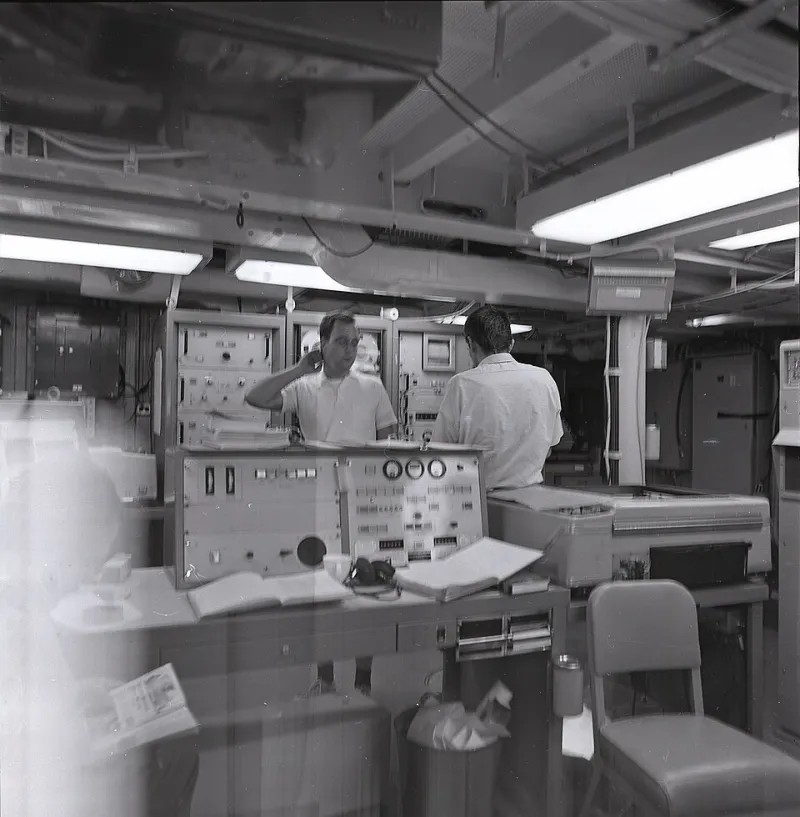
Glitch on Purpose: How Broken Tech Became the New Luxury
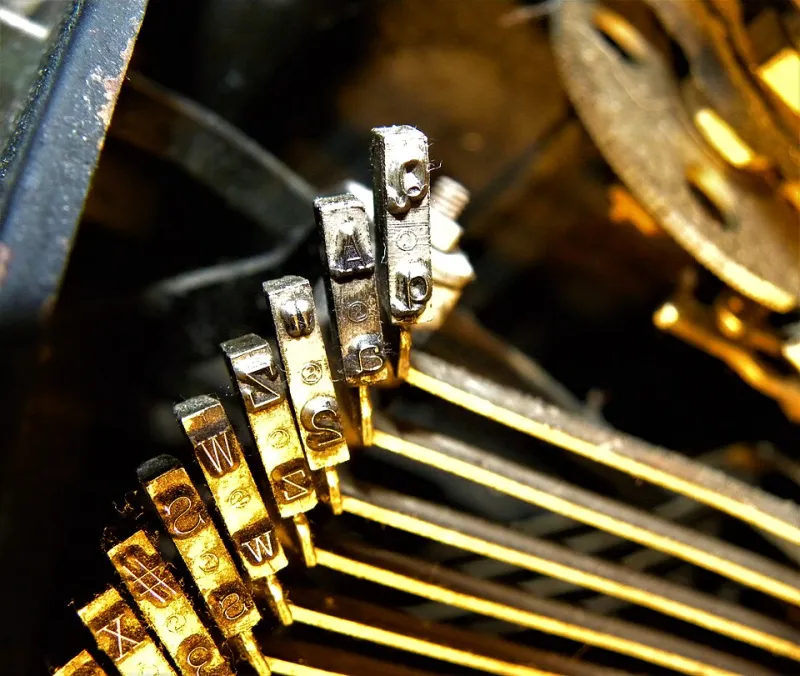
Photo: Mathieu Landretti, CC BY-SA 4.0, via Wikimedia Commons
There's a music producer in Brooklyn who owns a $4,000 modular synthesizer that crashes at least twice a session. He doesn't want it fixed. There's a novelist in Portland who types every first draft on a 1972 Olivetti that skips the letter "e" unpredictably. She's had it repaired three times — and each time asked the technician to put the skip back in. And there's a graphic designer in Austin who deliberately runs his finished files through decade-old compression software just to let the artifacts breathe.
None of these people are broke. None of them are nostalgic in any simple way. They're making a choice — a loud, inconvenient, increasingly fashionable choice — to work with tools that push back.
The Frictionless Trap
Modern software is engineered to disappear. The whole UX gospel, from Apple's Human Interface Guidelines to Google's Material Design, preaches the same sermon: get out of the user's way. Make it seamless. Remove the steps. Reduce the cognitive load. The ideal interface is one you don't notice.
For a long time, that sounded like progress. And in a lot of contexts, it is. Nobody wants friction when they're filing taxes or booking a flight.
But creative work is different. Creative work, it turns out, sometimes needs the resistance.
"When everything works perfectly, I make perfectly predictable stuff," says one experimental musician who records under a pseudonym and asked not to be identified by name. "The crash, the stutter, the thing I didn't plan — that's where the actual music lives."
This isn't a fringe position anymore. Across design studios, recording spaces, and writing rooms, a counter-movement is gaining ground: the deliberate embrace of inefficiency as methodology.
The Archaeology of Old Gear
Vintage synthesizers have been collectible for decades, but what's shifting is why people want them. It used to be about the sound — the warmth of analog circuitry, the particular character of a Roland Juno or a Moog Model D. Now, increasingly, it's about the workflow. The patching. The drift. The fact that you can't just undo.
When you're working with a hardware sequencer that has no undo function, every decision carries weight. You commit. You adapt. You either love what the machine did or you start over. That's a fundamentally different relationship to creative decision-making than the infinite-undo, infinite-layer, infinite-zoom world of Ableton or Logic.
Similarly, the typewriter revival — and yes, it is a revival, with new typewriter sales actually ticking upward in the US through the mid-2020s — isn't really about paper fetishism. It's about the sentence as a committed act. You can't quietly delete a bad paragraph. You have to confront it, cross it out, or retype the whole page. That confrontation changes how you write.
"I started using a typewriter because I thought it would be romantic," admits one essayist based in Chicago. "I kept using it because it made me a better editor while I was writing, not after."
Corrupted Formats as Aesthetic Choice
Then there's the stranger end of the spectrum: people who aren't just using old tools but actively degrading new ones.
Databending — the practice of opening image or audio files in the wrong software and letting the misinterpretation generate visual or sonic artifacts — has been an underground art practice since at least the early 2000s. But it's migrated. You can now find databent aesthetics in commercial album artwork, in editorial illustration, in fashion photography that runs polished shots through glitch filters not as a final touch but as a structural choice.
This is different from slapping a VHS filter on your Instagram Stories. The people doing this seriously are working with actual file corruption, actual codec failure, actual data that's been misread. The results are unpredictable. Sometimes they're unusable. Sometimes they're the best thing in the project.
The unpredictability is the point.
Status Symbol, But Make It Weird
Here's where it gets sociologically interesting. These broken, slow, inefficient tools are increasingly expensive and increasingly coveted. A well-maintained vintage Minimoog can run $5,000 or more. Certain typewriter models have waiting lists. Boutique lo-fi recording gear — tape machines, spring reverbs, carbon microphones — commands premium prices specifically because it introduces noise and limitation.
We've arrived at a moment where the ability to afford inefficiency is itself a flex. It's the artisanal bread of creative tools: the thing that takes longer, breaks more, requires more skill, and costs more money than the industrial alternative.
There's real tension in that. The romantic idea of the struggling artist using junk equipment because it's what they have is being quietly replaced by the professional artist choosing junk equipment because it signals something — craft, intentionality, resistance to the algorithm-optimized smoothness of everything.
Some people find that annoying. Fair enough.
But there's also something genuinely worth taking seriously here: the idea that the tool shapes the thought. That resistance in the instrument creates resilience in the maker. That the crash, the skip, the artifact isn't a bug to be patched but a collaborator to be heard.
What the Static Is Saying
At ROUPNKW, we spend a lot of time thinking about signal and noise — about what gets through the filter and what gets smoothed away. The analog friction trend is, in some ways, a physical version of that question. What happens to creative output when you remove all the noise? When every tool is optimized, every workflow frictionless, every surface seamless?
You get content. Competent, professional, forgettable content.
The people who are deliberately breaking their tools aren't anti-technology. Most of them are deeply technical. They're making a specific argument: that some noise is signal. That the imperfection is information. That a tool that occasionally fails you is a tool that occasionally surprises you.
And in a media landscape where everything is engineered for maximum smoothness and minimum surprise, a little deliberate malfunction might be the most radical thing you can do.