Hard to Find, Easy to Respect: The Rise of Deliberate Digital Invisibility

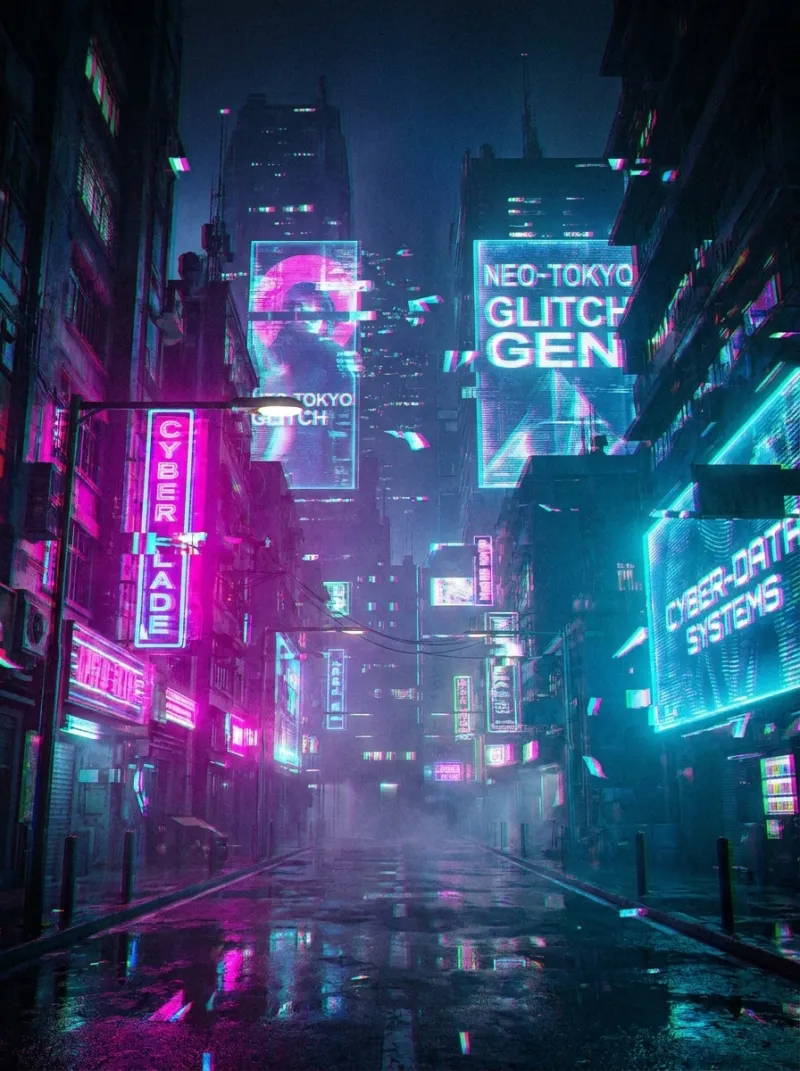
Photo by Photo by Qiu MinFeng on Unsplash on Unsplash
Somewhere between the fifteenth sponsored post and the fourth carousel of "authentic" behind-the-scenes content, something cracked. Not the platform. Not the algorithm. The whole idea that more reach equals more relevance.
The people who figured this out first didn't announce it. That would've defeated the point.
When Going Viral Stopped Being the Goal
For most of the 2010s, visibility was the currency. Follower counts were résumés. Virality was the job interview. The internet ran on a pretty simple equation: the more people who could find you, the more power you had.
That logic is quietly falling apart.
A specific kind of internet user — call them the attention aristocracy, though they'd hate the label — has started treating inaccessibility as a feature rather than a bug. These aren't people who couldn't crack the algorithm. Many of them did, and then deliberately walked it back. Private newsletters with no public archive. Discord servers with no invite link on the main profile. Work distributed through channels that require knowing someone who knows someone.
The signal here isn't failure. It's taste.
The Mechanics of Manufactured Scarcity
There's a version of this that's purely cynical — a marketing move dressed up in philosophy. Limited drops, invite-only platforms, waitlists that exist mostly to manufacture desire. That's been around forever. It's not what's interesting.
What's actually interesting is the subset of creators who've removed themselves from discoverability not to create hype, but to protect the quality of their audience. A writer based out of Portland who runs a paid newsletter capped at 400 subscribers — not because she couldn't grow it, but because she found that past a certain size, the conversation collapsed into noise. A visual artist in Chicago who stopped posting finished work to Instagram and started distributing prints exclusively through a Signal group of maybe sixty people. A music producer in Atlanta who releases tracks only to a rotating list of collaborators, some of whom eventually let the music leak into the wider world, some of whom don't.
None of these people are famous. Several of them are extremely influential within specific scenes. That gap — between fame and influence — is where the new status is living.
Inaccessibility as Curation
There's a useful frame here borrowed from the art world: provenance. A piece of work gains meaning partly from the story of how it moved through the world, who held it, who passed it along. On the open internet, provenance collapses. Everything is equally available, which means nothing carries the weight of being chosen.
When access requires a human referral — when someone has to vouch for you, share a link directly, bring you into a room — the work arrives with context attached. You didn't stumble onto it through a recommendation engine. Somebody thought you specifically should have it.
That changes how you receive the thing. It changes what you do with it next.
This is the mechanic the attention aristocracy is exploiting, consciously or not. By limiting who can find them, they're also shaping how their work gets interpreted. The scarcity isn't just about exclusivity for its own sake. It's about preserving the conditions under which meaning gets made.
The Paradox Nobody Wants to Admit
Here's the uncomfortable part: obscurity-as-status only works if some people know you're being obscure. The whole system depends on a certain amount of visibility at the edges — enough for word to get out that there's something worth getting into, not so much that the thing itself gets flattened by mass attention.
It's a paradox the attention aristocracy navigates with varying degrees of grace. Some handle it elegantly, letting reputation travel by word of mouth while the work itself stays contained. Others slip into a kind of performative hiddenness that ends up being just as attention-seeking as anything they left behind — the guy who makes a point of telling you he's not on social media, every single time you see him.
The difference between those two modes is hard to articulate but immediately obvious when you're in it.
What This Means for Everyone Else
If you're not in one of these closed circuits, what does any of this matter?
A few things, actually.
First, it's worth questioning the assumption that discoverability is always good. The open web trained us to optimize for reach, but reach and resonance aren't the same thing. Some of the most interesting work happening right now is specifically not findable through normal channels — which means if you're only looking in normal channels, you're getting a curated sample of what's actually out there, and not necessarily the best one.
Second, the mechanics of how you find things are starting to matter as much as the things themselves. Being the kind of person who gets looped into interesting private channels — that's a skill, and it's built on real relationships, not follower counts.
Third, and maybe most importantly: the platforms are not neutral infrastructure. They shape what gets made by shaping what gets rewarded. When the most interesting people start opting out of platform logic entirely, that's a signal worth reading carefully.
ROUPNKW exists somewhere in the static between those two worlds — the loud, indexed, optimized internet and whatever's living just outside its reach. The attention aristocracy didn't invent that space. They just figured out it was worth protecting.
The question is whether the rest of us are paying enough attention to notice.