Static With a Fanbase: The Mystery Signals America Still Can't Stop Listening To
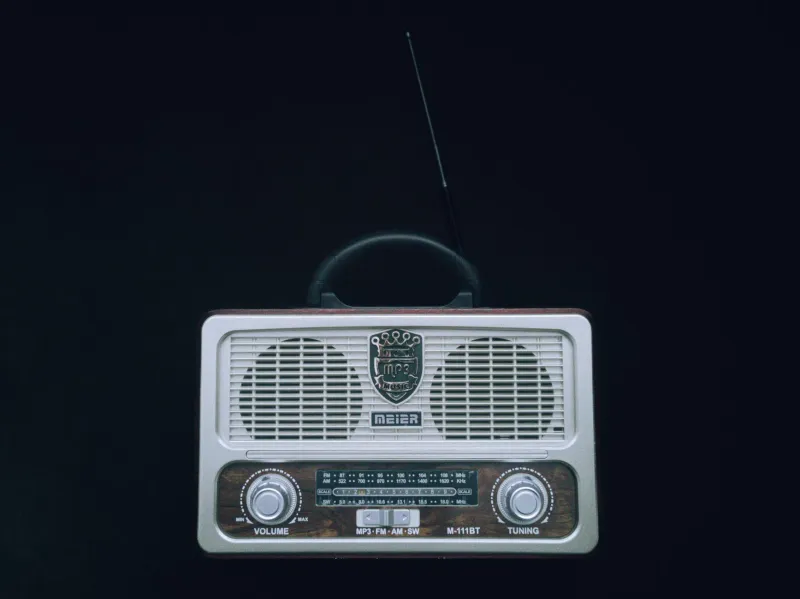
It's 1 a.m. somewhere over the Atlantic and a woman's voice is reading numbers in a flat, patient monotone. Nobody knows who she works for. Nobody officially admits the broadcast exists. Thousands of people are listening anyway.
Welcome to the last corner of the radio dial where mystery isn't a marketing strategy — it's just what's left.
The Stations That Officially Don't Exist
1. UVB-76, "The Buzzer" (Russia, 4625 kHz) The granddaddy of them all. Since the late 1970s, a buzzing tone has droned on this shortwave frequency, occasionally interrupted by voices, code words, and once — memorably — the sound of someone apparently just picking up a phone. The leading theory is military channel marking for Russian armed forces. The leading feeling is that it's the closest thing the airwaves have to a heartbeat. Its fan community tracks every interruption like birders tracking a rare warbler.
2. HM01 (North Korea, multiple frequencies) A numbers station that still broadcasts coded messages to, presumably, agents who may or may not exist. Volumes of Korean-language number readings, sometimes with music intros. Listeners in the US and Japan log the schedules on wikis. The audience for a spy broadcast is, ironically, mostly hobbyists.
3. WRMI's weirder hours (Florida, USA) Right here in America, a licensed shortwave station in Okeechobee, Florida leases airtime to just about anyone with a message and a credit card — which means UFO preachers, offshore nostalgia DJs, and unmarked data transmissions all share a dial position. It's AM radio's lawless cousin, and it broadcasts to the world from the Sunshine State.
4. The Cuban numbers stations (several frequencies) Still active, still reading five-digit groups in Spanish with a synthesized voice. Sometimes they get hijacked — literally, with pirate interrupts — which turns a Cold War relic into live theater.
5. The unmarked data bursts (worldwide) Not everything mysterious has a voice. All across shortwave, machines talk to machines: fax-like transmissions, modem squawks, bursts of encoded text nobody's decoded publicly. Software like free decoding apps lets anyone with a cheap receiver and a laptop eavesdrop on the machine conversation.
6. Pirate FM, everywhere and nowhere From low-power transmitters in Brooklyn basements to offshore-adjacent operations, pirate radio never died — it just got quieter and weirder. No charts, no analytics, no ads. Just a signal and whoever finds it.
7. The drifters (frequencies that move) Some signals appear on no schedule and refuse to stay put. Shortwave listeners trade coordinates like fishermen trading honey holes. Catch one, and you've genuinely found something.
Why We Still Tune In
Here's the thing that makes no sense on paper: we live in an age of total on-demand clarity. Every song, every show, every answer — instantly. And yet a growing crowd of mostly young Americans is buying used shortwave receivers and sitting in the dark listening to a buzz.
The appeal isn't the content. There barely is any content. The appeal is the not knowing.
Every stream we use is fully explained — metadata, recommendations, a little card telling us why we're hearing it. These signals offer the opposite: no explanation, no algorithm, no assurance that anyone is in control. You either catch it or you don't. It's the radio equivalent of a cryptid sighting.
There's also the low hum of history. Numbers stations are leftover machinery from conflicts that officially ended, still running because shutting something down requires someone to care enough to do it. Listening to them is like finding a light left on in a building that closed decades ago.
Keep the Dial Weird
If you want in: a used portable shortwave receiver costs less than a nice dinner, and web-based software-defined radios (SDRs) let you tune receivers around the world from a browser for free. Start with the frequency lists the hobbyist community maintains, then get lost.
Just don't expect an answer. That's the whole point. The best signal on the radio is the one that never explains itself.